
www.trysmallhours.com
Small Hours
Your doctor suggested CBT-I
A six-week insomnia program to start tonight, on your phone. Weeks 1 to 3 are free.
What it is
CBT-I stands for cognitive behavioural therapy for insomnia. It is not sleeping pills and it is not a list of sleep tips. It is a structured six-week program that re-trains when you sleep and how you think about sleep, built from what your own nights show.
Doctors' guidelines in the United States and Europe recommend CBT-I as the first thing to try for long-term insomnia, before medication.
What the first week looks like
Open www.trysmallhours.com on your phone, or scan the code, and create an account with your email or Google. There is nothing to install.
Each morning, answer a two-minute diary about last night.
After about a week of mornings, the app works out your sleep efficiency, the share of your time in bed that you actually slept, and gives you your first sleep window to try.
Lessons arrive week by week. The diary, your numbers and your weekly sleep window are free with no time limit; the full program with the coach starts with a free trial.
What to expect
The first two or three weeks can feel harder before they feel better. That is expected, and the program supports you as you go.
If you fall asleep without meaning to during the day, drive or operate machinery for work, have had mania or hypomania, or have a seizure disorder, tell your doctor first: the program has a version that does not set a sleep schedule.
Bring your doctor the report
After a few weeks, the app can make a progress report, a PDF you can print, email or fax to your doctor, showing your sleep night by night. Only you decide whether to share it.
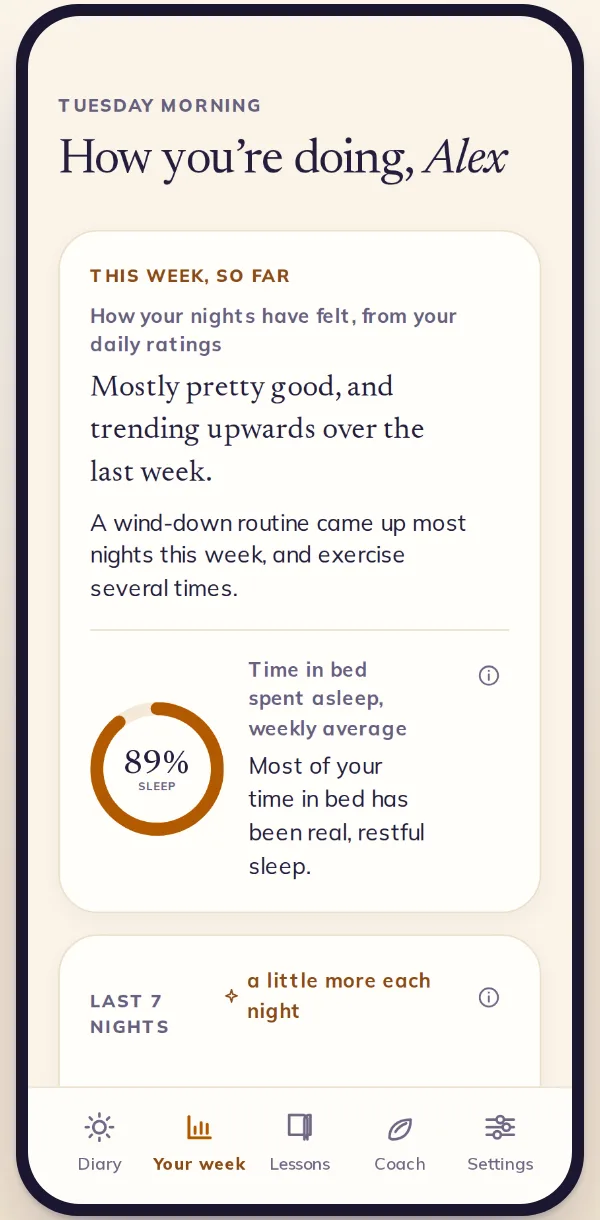
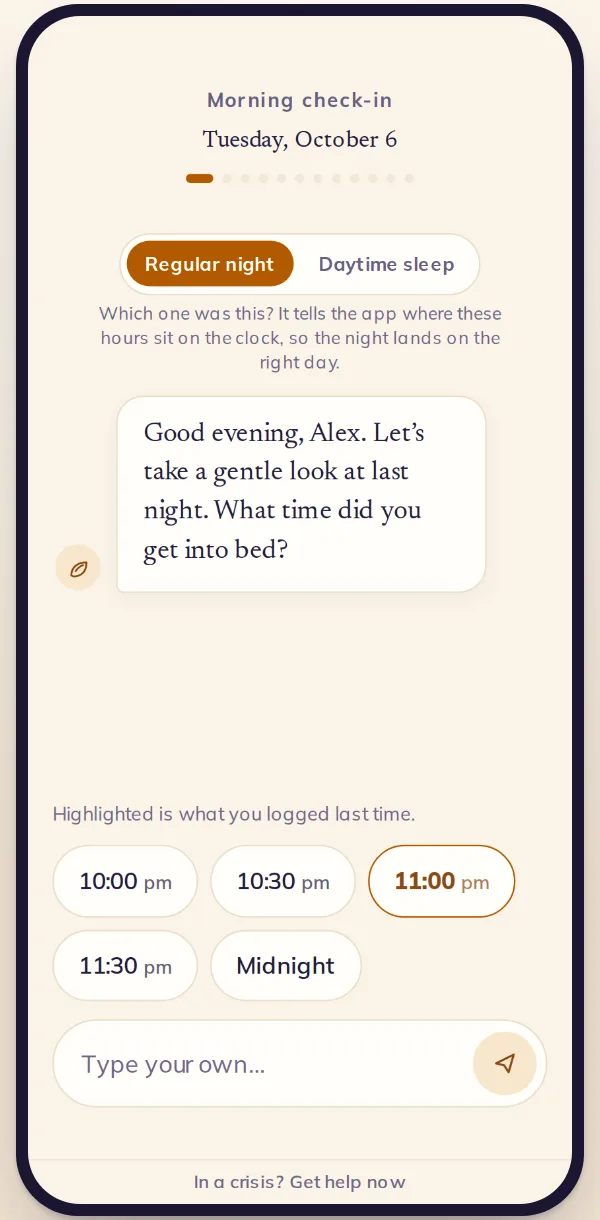
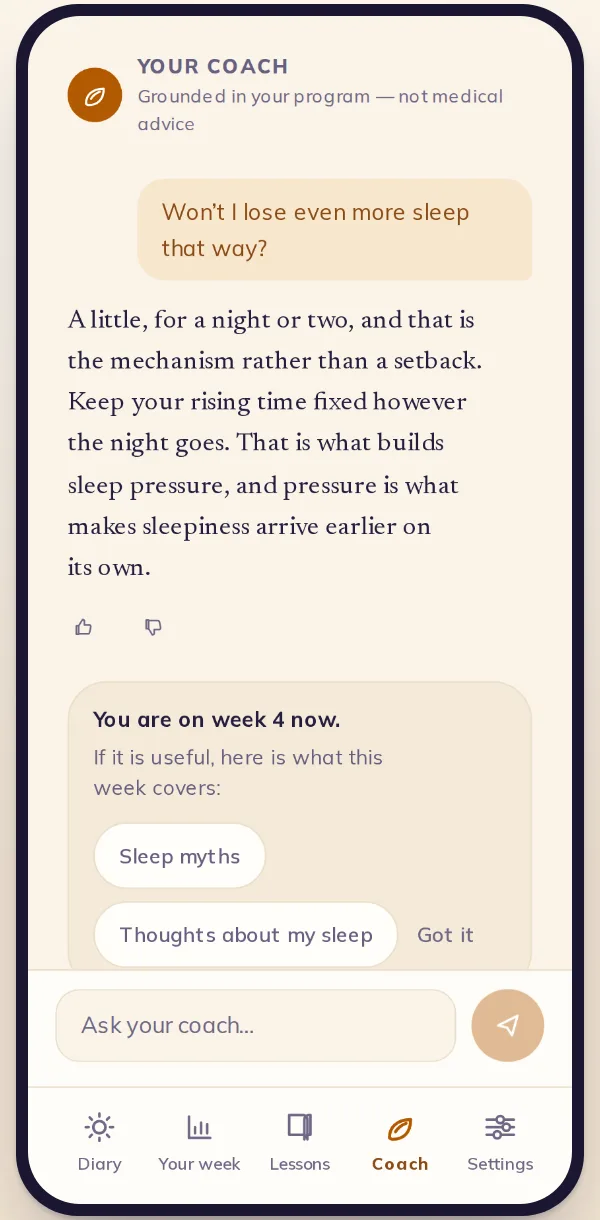
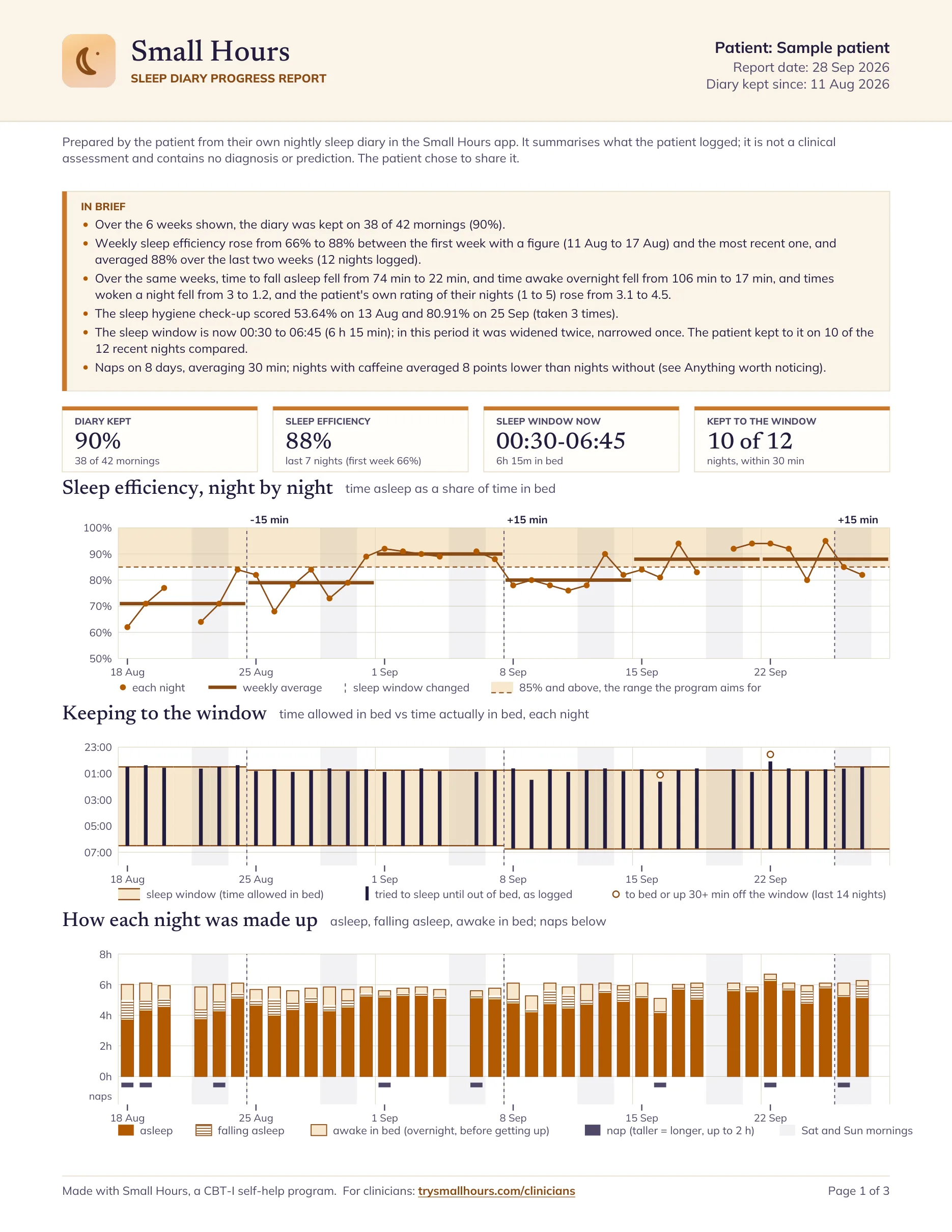
Screens from the app, shown with a made-up patient's diary.
Everything on this sheet, the research behind the program and its references are on the website: www.trysmallhours.com, with the sleep articles at www.trysmallhours.com/articles.
Small Hours is a self-guided program for adults and general education, not medical advice and not a replacement for your doctor.
Sources: American College of Physicians guideline (2016); American Academy of Sleep Medicine guideline (2021); European Insomnia Guideline (2023).