By Small Hours · Last reviewed
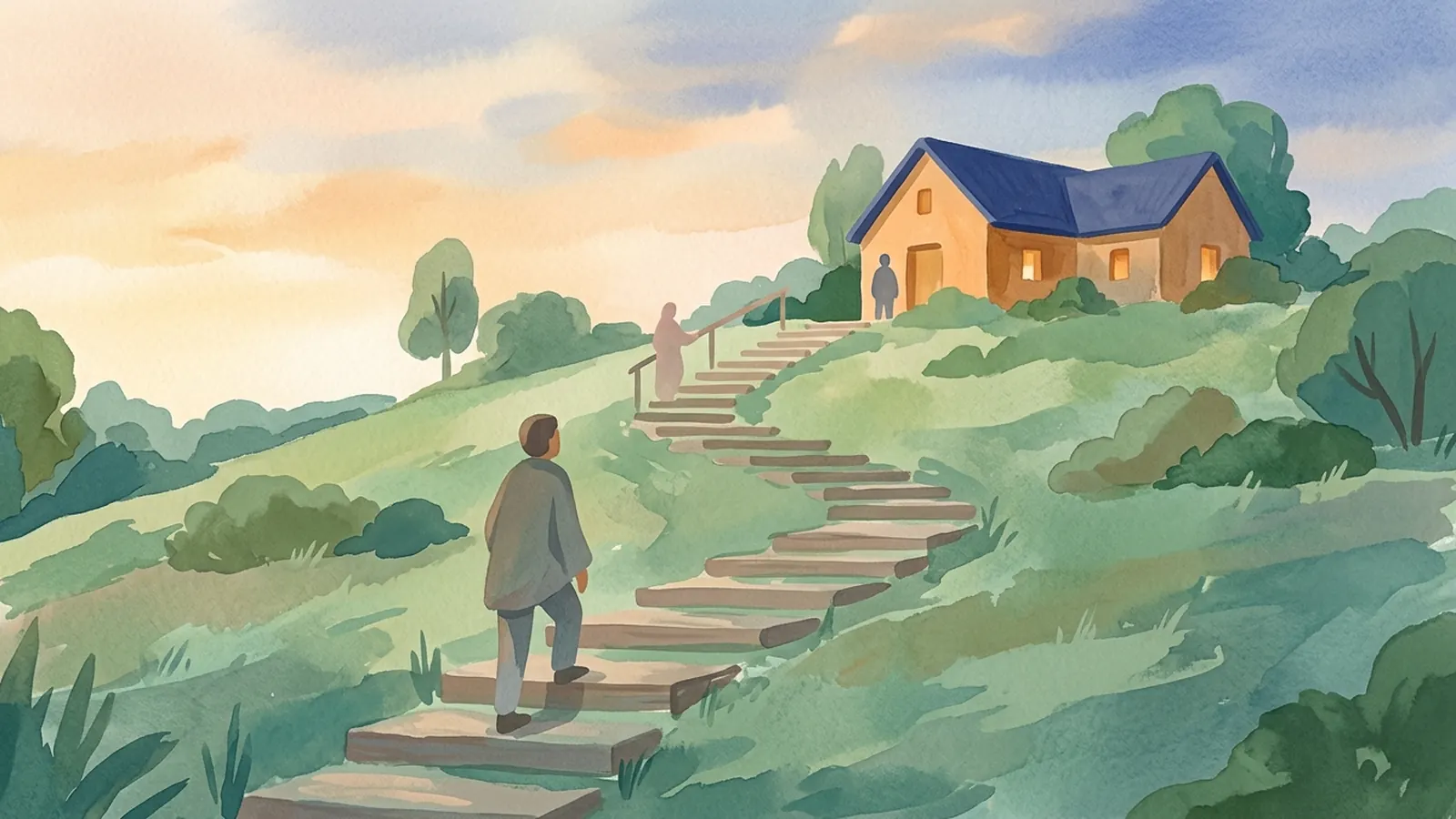
Guidelines put CBT-I (cognitive behavioural therapy for insomnia) first for chronic insomnia, but few patients reach a trained therapist. Stepped care matches treatment intensity to need: start with a low-intensity option you can offer in primary care, and step up for people who do not respond. Medication has a defined, secondary place. [1][2][3]
What the research says
The evidence is an access gap plus two trials of low-intensity steps. In a telephone survey of 2,000 Canadians, 13.4% met full criteria for insomnia, only 13% had ever consulted a provider about sleep, and prescribed medication was the most widely used sleep aid asked about (10% in the past year), ahead of natural products, over-the-counter products and alcohol. [4] Stepped care, proposed in 2009, puts self-administered CBT-I at the entry level, nurse-led small groups above it, and a route upstream for incomplete responders. [3] In 79 older adults, two sessions and two phone calls with a nurse clinician produced a higher response at four weeks than printed information (67% against 25%), [5] and nurse-guided digital CBT-I in 134 patients across 15 practices had a large effect on insomnia severity at eight weeks. [6] Medication sits after: the American College of Physicians places it after CBT-I alone has not worked, and the Canadian guideline on tapering benzodiazepine receptor agonists recommends offering older adults a slow taper. [1][7]
The studies behind this
- Access: in a telephone survey of 2,000 Canadians, 13.4% met full criteria for insomnia. Only 13% had ever consulted a health care provider about sleep, and prescribed medication was the most widely used of the sleep aids asked about (10% in the past year), ahead of natural products, over-the-counter products and alcohol. [4]
- Stepped care: proposed in 2009, with self-administered CBT-I as the entry level, nurse-led small groups above it, and a route upstream for incomplete responders. [3]
- Brief behavioural treatment: in one trial of 79 older adults, two sessions and two phone calls with a nurse clinician produced a higher response at four weeks than printed information (67% against 25%). [5]
- Nurse-guided digital CBT-I in general practice: 134 patients in 15 practices, with a large effect on insomnia severity at eight weeks. [6]
- Medication: the American College of Physicians places it after CBT-I alone has not worked. The Canadian guideline on tapering benzodiazepine receptor agonists recommends offering a slow taper to older adults. [1][7]
The access gap
- Treatment seeking. Among the Canadians surveyed, 13% had consulted a provider about sleep difficulties once in their lifetime, and 10% had used prescribed sleep medication in the past year. [4] The paper was published in 2011, and we found no more recent national figure.
- Trained providers. One geographic count found 752 behavioural sleep medicine providers listed in directories and mailing lists worldwide. 88% were in the United States, and 105 of the 167 largest US cities had none. [8] This is not a Canadian count, and we found no Canadian one. It counts people who listed themselves, so treat it as an indication of scarcity, not a census.
- Policy. A 2025 position paper from European and Canadian experts says insomnia disorder is often deprioritised by health authorities, with no reimbursement for recommended treatments. It calls for chronic insomnia treatment to be built into stepped-care mental health models. [9]
- The guideline answer. The American Academy of Sleep Medicine (AASM) says patients should receive one of the recommended behavioural treatments rather than sleep hygiene alone, taking accessibility and resource needs into account. [2]
What stepped care means
Espie proposed a five-level hierarchy of CBT-I delivery. Self-administered CBT-I is the entry level. Manualised small-group CBT-I delivered by nurses is the next. Patients are allocated by assessed need, and the model must be able to refer people upstream when a lower step gives an incomplete response. The author flags the need for clinical governance. [3]
Does it work in routine care? The evidence is early. One evaluation followed 50 adult outpatients through a stepped pathway. Age, employment status and sleep quality and latency predicted who went on to more intensive services. The authors concluded that a low-intensity first step may have been enough for younger, employed people and for those with better sleep. [10] This evaluation was a small study in a single setting.
A sketch for a primary care practice (our own arrangement of the steps above, not a protocol tested as a whole):
- Assess, then start low. Confirm chronic insomnia, check for other sleep disorders, then offer brief behavioural treatment or a digital CBT-I program.
- Add support. Review the sleep diary, check progress, and have a nurse or other team member guide the patient where you can.
- Step up. Refer to a clinician trained in full CBT-I, or to a sleep specialist, for incomplete response or complicating conditions.
- Medication decisions sit beside these steps, not at the start. See below.
Before step one: assessment
- Diagnosis and history. The AASM guideline says treatment should rest on a diagnosis using ICSD-3 or DSM-5 criteria and a comprehensive clinical history. [2]
- Tools. The European guideline recommends a clinical interview, sleep questionnaires and sleep diaries. [11]
- Other sleep disorders. The same guideline advises polysomnography when other sleep disorders are suspected, such as periodic limb movement disorder or sleep-related breathing disorders. [11] A review reports that earlier studies found insomnia and sleep apnea occurring together in 30% to 50% of patients. [12]
- Cautions for sleep restriction. Sleep restriction may be contraindicated in high-risk occupations (drivers, machinery operators), in people predisposed to mania or hypomania, and in people with poorly controlled seizure disorders. [2]
Step one: brief behavioural treatment
- What it is. The AASM calls these "brief therapies for insomnia": abbreviated CBT-I, typically one to four sessions, centred on education about sleep and a tailored behavioural prescription built on stimulus control and sleep restriction. Full CBT-I is typically four to eight sessions. [2]
- Guideline strength. A conditional (weaker) recommendation for brief therapies. The task force found 11 trials, seven of which gave data that could be pooled, and judged the evidence moderate quality. Side effects were judged minimal and short-term. [2]
- The best-known trial. Buysse and colleagues randomised 79 older adults (mean age 71.7) with chronic insomnia, recruited from the community and one primary care clinic. A nurse clinician gave two sessions and two phone calls of individualised behavioural instructions, against printed educational material. At four weeks, 67% of the brief treatment group were responders against 25% of controls, and gains held at six months. The authors found no differing effect by hypnotic use or sleep apnea. [5]
- Limits. One trial, in older adults, with an information-only comparison. Polysomnography did not show a benefit, although diary and actigraphy measures did. [5]
Step one or two: digital CBT-I
- Effect. A meta-analysis of 33 trials found ISI scores 5.00 points lower than controls after treatment. Face-to-face CBT-I was ahead by 3.07 points, within the authors' 4-point non-inferiority margin. [13]
- In primary care. A pragmatic trial in 15 Dutch general practices compared nurse-guided internet CBT-I with usual care in 134 patients. 68% completed the program. Insomnia severity improved by a large margin at 8 weeks (d 1.66) and still at 26 weeks (d 1.02). No adverse events were reported. Sleep medication use did not change significantly. [6]
- Cost. The same trial's economic analysis found no significant difference in societal costs. The guided program had a 95% probability of being cost-effective for insomnia severity at the ceiling ratio the authors set, but only a 67% probability at their ceiling per quality-adjusted life year, because the gain in insomnia severity did not carry over to a similar gain in quality-adjusted life years. The economic analysis comes from a Dutch setting. [14]
- Guideline position. The European guideline lists digital delivery alongside in-person delivery as first-line. [11] The AASM found too little evidence to recommend for or against specific delivery formats. [2]
For a closer look at the digital evidence, see our evidence summary for clinicians.
Where medication sits
Guidelines treat medication as a second step, to be added when CBT-I has not been enough. The agents they mention are reported here neutrally, without doses.
- American College of Physicians (2016): decide together with the patient, after discussing what a short course of medication offers against its risks and cost, whether to add a drug when CBT-I alone was unsuccessful. This is a weak recommendation on low-quality evidence. [1]
- European guideline (2023): a drug can be offered when CBT-I is not sufficiently effective. For short-term treatment (up to four weeks) it lists benzodiazepines, benzodiazepine receptor agonists, daridorexant and low-dose sedating antidepressants. It allows orexin receptor antagonists for up to three months or longer in some cases, and prolonged-release melatonin for up to three months in people aged 55 and over. It recommends against antihistamines, antipsychotics, fast-release melatonin, ramelteon and herbal remedies. [11]
- AASM (2017): all recommendations are weak. It suggests suvorexant, eszopiclone, zaleplon, zolpidem, triazolam, temazepam, ramelteon and doxepin for specific symptoms. It suggests against trazodone, tiagabine, diphenhydramine, melatonin, tryptophan and valerian. [15]
- The lists differ. For example, ramelteon and melatonin are treated differently in the two documents. Which agents are marketed in Canada is outside what this page covers.
Deprescribing
Many patients arrive already on a sleeping pill. The Canadian deprescribing guideline for benzodiazepine receptor agonists makes these points. [7]
- Who. Offer a slow taper to adults aged 65 and over, regardless of how long they have taken one. Suggest offering it to adults aged 18 to 64 who have used one for more than four weeks.
- When it applies. To insomnia on its own, or insomnia with comorbidities that are effectively managed. It does not apply to people with other sleep disorders or with untreated anxiety, depression or other conditions that may be causing or aggravating insomnia.
- Evidence. Tapering improved cessation rates compared with usual care, without serious harms.
- What helps. Patients may be more open to the conversation if they understand the reason (potential for harm), help build the plan, and are offered behavioural advice.
Our reading: a behavioural insomnia treatment is a natural companion to a taper. The Canadian guideline says "behavioural advice", not CBT-I specifically, and the AASM notes that CBT-I may reduce the need for drug treatment. [2] For a patient who wants to read about tapering first, see coming off sleeping pills, with your doctor.
When to refer to a sleep specialist
- Another sleep disorder is suspected. Sleep apnea, periodic limb movements or similar. [11][12]
- Treatment-resistant insomnia. The European guideline lists it as an indication for polysomnography. [11]
- Incomplete response to a lower step. Stepped-care models are meant to be able to refer people upstream. [3]
- Sleep restriction cautions. Mania or hypomania risk, poorly controlled seizures, or a high-risk occupation. [2]
- Untreated anxiety, depression or another condition that may be driving the insomnia. The deprescribing guideline does not apply to these patients until they are treated. [7]
Beyond these, thresholds for referral are a matter of clinical judgement and local access.
Where evidence is thin
- Stepped care as a whole pathway. The main model is a proposal, and the routine-practice evaluation we found enrolled 50 people. [3][10]
- Brief treatment. The best-known primary care trial is one small study in older adults with an information-only comparison. [5]
- Access figures. The Canadian survey is from 2011, and the provider count is American and based on self-listing. [4][8]
- Digital care. The AASM could not grade delivery formats, and the Dutch cost findings may not carry over to Canada. [2][14]
- Medication. All AASM drug recommendations are weak, and the European and American lists differ. [15][11]
Where Small Hours fits
Small Hours is a six-week, self-guided CBT-I program for adults that we build. It could serve as a digital step for some of your patients. It has no published trial of its own, and it makes no outcome claims. The evidence above concerns other programs and does not transfer automatically.
What it includes, as described on our clinicians page:
- A short morning sleep diary, with sleep efficiency worked out for the patient, and paced weekly lessons.
- A weekly sleep-window recommendation from fixed, published rules rather than an AI model.
- Screening before any restriction for bipolar disorder, seizure history, chronic migraine, pregnancy and other major conditions. A patient who flags one is offered an alternative with no calculated sleep window (a consistent wake time instead); the offer is never applied automatically. Signs of sleep apnea prompt the patient to raise it with their doctor.
- A coach limited to the program's teaching. It never gives a medication dose or tapering schedule, and sends those decisions back to the prescriber or pharmacist.
- A progress report the patient can generate on their own device from their own diary as a PDF and bring to you. The app sends nothing about a patient to their clinician; the report reaches you only if the patient gives it to you.
Small Hours does not replace a specialist assessment. We designed Small Hours so that it can be used alongside a clinician, which is the arrangement we would choose. Small Hours does not require a clinician. That is a design intent, not a research finding.
General education, not medical advice.
References
- Qaseem A, Kansagara D, Forciea MA, Cooke M, Denberg TD. Management of chronic insomnia disorder in adults: a clinical practice guideline from the American College of Physicians. Ann Intern Med. 2016;165(2):125-133. Source for reference 1 (opens in a new tab)
- Edinger JD, Arnedt JT, Bertisch SM, et al. Behavioral and psychological treatments for chronic insomnia disorder in adults: an American Academy of Sleep Medicine clinical practice guideline. J Clin Sleep Med. 2021;17(2):255-262. Source for reference 2 (opens in a new tab)
- Espie CA. 'Stepped care': a health technology solution for delivering cognitive behavioral therapy as a first line insomnia treatment. Sleep. 2009;32(12):1549-1558. Source for reference 3 (opens in a new tab)
- Morin CM, LeBlanc M, Bélanger L, Ivers H, Mérette C, Savard J. Prevalence of insomnia and its treatment in Canada. Can J Psychiatry. 2011;56(9):540-548. Source for reference 4 (opens in a new tab)
- Buysse DJ, Germain A, Moul DE, et al. Efficacy of brief behavioral treatment for chronic insomnia in older adults. Arch Intern Med. 2011;171(10):887-895. Source for reference 5 (opens in a new tab)
- Van der Zweerde T, Lancee J, Slottje P, Bosmans JE, Van Someren EJW, van Straten A. Nurse-guided internet-delivered cognitive behavioral therapy for insomnia in general practice: results from a pragmatic randomized clinical trial. Psychother Psychosom. 2020;89(3):174-184. Source for reference 6 (opens in a new tab)
- Pottie K, Thompson W, Davies S, et al. Deprescribing benzodiazepine receptor agonists: evidence-based clinical practice guideline. Can Fam Physician. 2018;64(5):339-351. Source for reference 7 (opens in a new tab)
- Thomas A, Grandner M, Nowakowski S, Nesom G, Corbitt C, Perlis ML. Where are the behavioral sleep medicine providers and where are they needed? A geographic assessment. Behav Sleep Med. 2016;14(6):687-698. Source for reference 8 (opens in a new tab)
- Palagini L, Arango C, Bassetti CLA, et al. The need to prioritize 'insomnia disorder' in public health agendas: 'a wakeup call' position paper from European and Canadian experts in sleep and mental health. Sleep Med. 2025;135:106763. Source for reference 9 (opens in a new tab)
- Vincent N, Walsh K. Stepped care for insomnia: an evaluation of implementation in routine practice. J Clin Sleep Med. 2013;9(3):227-234. Source for reference 10 (opens in a new tab)
- Riemann D, Espie CA, Altena E, et al. The European Insomnia Guideline: an update on the diagnosis and treatment of insomnia 2023. J Sleep Res. 2023;32(6):e14035. Source for reference 11 (opens in a new tab)
- Sweetman A, Lack L, Bastien C. Co-morbid insomnia and sleep apnea (COMISA): prevalence, consequences, methodological considerations, and recent randomized controlled trials. Brain Sci. 2019;9(12):371. Source for reference 12 (opens in a new tab)
- Soh HL, Ho RC, Ho CS, Tam WW. Efficacy of digital cognitive behavioural therapy for insomnia: a meta-analysis of randomised controlled trials. Sleep Med. 2020;75:315-325. Source for reference 13 (opens in a new tab)
- Baka A, van der Zweerde T, Lancee J, Bosmans JE, van Straten A. Cost-effectiveness of guided internet-delivered cognitive behavioral therapy in comparison with care-as-usual for patients with insomnia in general practice. Behav Sleep Med. 2022;20(2):188-203. Source for reference 14 (opens in a new tab)
- Sateia MJ, Buysse DJ, Krystal AD, Neubauer DN, Heald JL. Clinical practice guideline for the pharmacologic treatment of chronic insomnia in adults: an American Academy of Sleep Medicine clinical practice guideline. J Clin Sleep Med. 2017;13(2):307-349. Source for reference 15 (opens in a new tab)
This article is general education, not medical advice. It cannot diagnose anything or replace a conversation with your doctor. Read how we choose and check sources on the how we write page.